Workshops & Seminars
Workshops and seminars are updated every year to reflect new trends, emerging tools, and current challenges in science communication.
Internships
Internships are an integral part of the SciComm Master’s program. They take place during the second semester (typically February–May), require a minimum of 250 hours, and are mandatory for all students.
Courses
Explore our comprehensive master’s program that prepares you for the evolving landscape of science communication and research innovation.
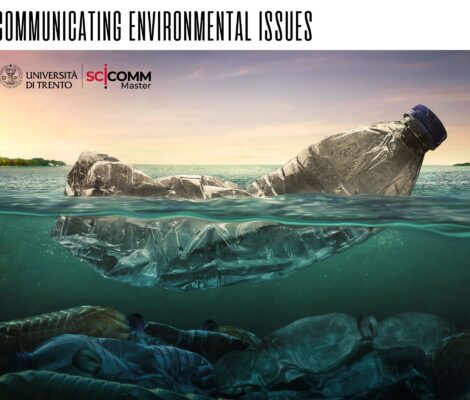
Communicating Environmental Issues
This introductory course in environmental and resource economics spans four two-hour sessions, each addressing key economic dimensions of environmental issues through theoretical foundations and real-world applications. The curriculum progresses from fundamental concepts of market failures and environmental externalities to the economic classification of goods, with particular emphasis on public goods and environmental quality. Students explore why standard market mechanisms often fail to provide adequate environmental goods and services, and examine alternative approaches to address these gaps.
The course advances to compare traditional linear economic models with emerging circular economy paradigms, demonstrating how sustainable resource use can minimize waste and optimize efficiency. The final session focuses on environmental communication and market information asymmetries, introducing eco-labels and environmental certifications as tools to enhance transparency and bridge information gaps between consumers and producers. This comprehensive approach equips students with essential economic frameworks for understanding and addressing contemporary environmental challenges.
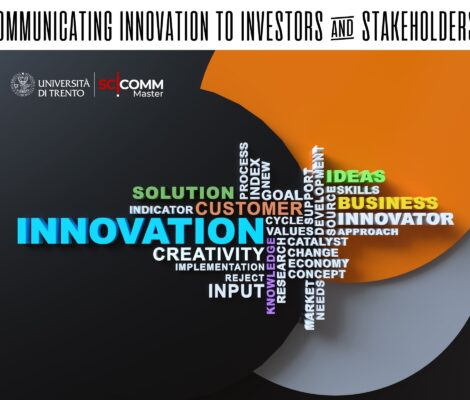
Communicating innovation to investors and stakeholders
This interactive seminar teaches participants the essential communication techniques entrepreneurs and startups use to present innovations to investors, stakeholders, and customers. Students will master the fundamentals of startup terminology and explore key presentation tools including elevator pitches, investor decks, executive summaries, and business plans. Through hands-on workshop activities, participants will develop a comprehensive communication strategy for an innovation project. The seminar addresses the critical challenge of effective oral and written communication that entrepreneurs face at every stage of business development, equipping students with the skills needed to convince investors that their business ideas have genuine potential and deserve investment.
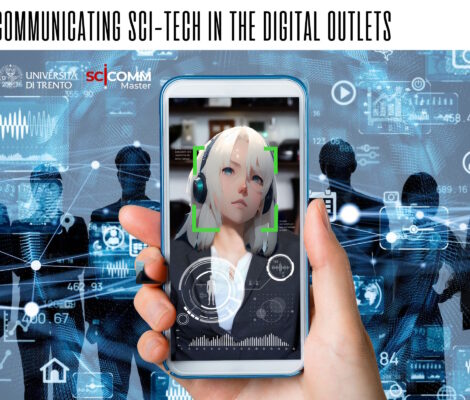
Communicating Science through digital media
This workshop explores how to create scientifically accurate content tailored for digital platforms and online users’ informational needs. Participants will learn to understand how audiences search for information and develop strategies to ensure the right content reaches the right people on appropriate platforms. The focus is on mastering the languages and formats of various digital channels to build effective micro-content, from Google searches and YouTube videos to Instagram posts and TikTok content. Students will tackle the challenge of identifying key concepts, creating cohesive narratives through individual content pieces, and maintaining compliance with regulated and ethical communication guidelines across emerging and established platforms.
Evaluating public engagement with science and technology
Social media is a powerful tool for public engagement with science and technology, yet its impact is often unclear. This course trains participants to think critically about evaluating social media communication — from setting meaningful objectives and KPIs, to selecting the right metrics, interpreting results, and reporting insights responsibly. We will examine common pitfalls, such as focusing on vanity metrics or measuring the wrong outcomes, and explore how to approach evaluation in a deliberate and evidence-based way. Through practical exercises, participants will gain skills to assess social media campaigns with greater clarity, rigor, and impact.
Elena Milani, Ph.D | LinkedIn
Innovation: economy, policy and communication
This course introduces students to innovation processes and their economic and policy impacts. Participants will learn fundamental concepts in innovation studies while exploring communication strategies used by organizations and institutions driving technological advancement. Students will develop both theoretical knowledge and practical skills to effectively promote and support innovation and technology transfer across diverse organizational contexts. The course combines analytical frameworks for understanding innovation with hands-on experience in communication practices essential for successful innovation management.
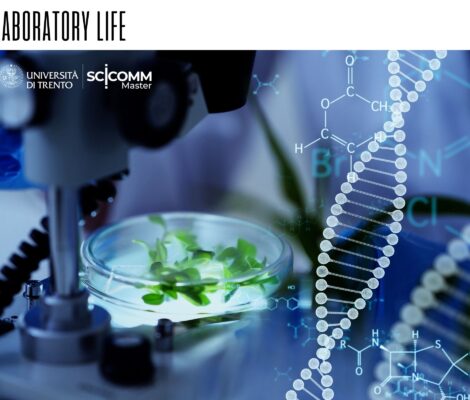
Laboratory life
This course provides a concrete introduction to life sciences and biomedical research through direct engagement with active laboratories and researchers. Students will explore how scientists conduct cutting-edge research and adapt their communication strategies for diverse audiences, from academic peers to the general public. Through introductory lectures and hands-on lab visits, participants gain firsthand insight into both the research process and the communication challenges faced by today’s life scientists.
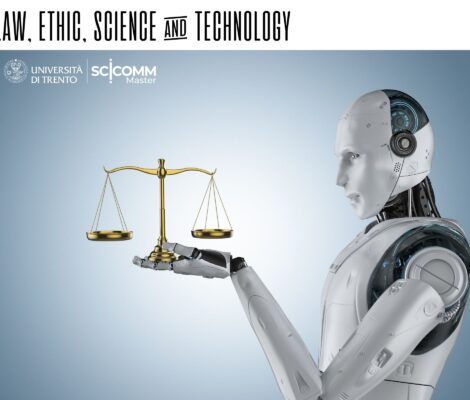
Law, Ethics, science and technology
Module 1: Artificial intelligence: law and ethics
Module 2:
- Lesson 1. Freedom of care between science and self-determination. This lecture will analyse some controversial cases that have emerged in different countries in relation to the claim of freedom of choice of non-science-based therapeutic methods.
- Lesson 2. The legal protection of animals. This lesson will analyse the public debate on animal rights, with a particular focus on the scientific use of animals.
- Lesson 3. End-of-life choices. This lesson will cover the current debate about choices at the end of life, outlining some common elements in different countries.
Open Science: AI in everyday life
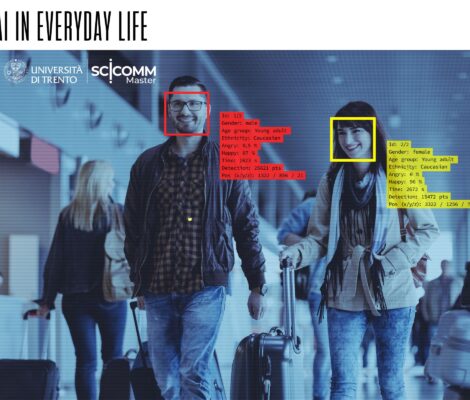
This course introduces the key concepts of artificial intelligence and machine learning, focusing on how AI systems work and their impact on daily life. Students will explore how AI applications function, from search engines to social media platforms. The course examines how these systems use personal data and the technical methods behind data-driven AI. Beyond the technical aspects, we’ll discuss the ethical and social implications of AI technology. Students will develop critical thinking skills to evaluate AI applications and understand their potential risks and benefits.
Science in Fiction
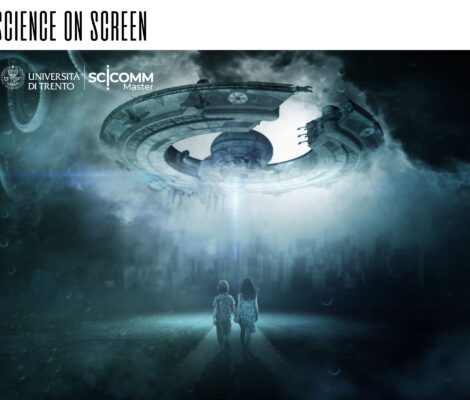
This course examines how audiovisual media—including cinema, television, and YouTube—shape public understanding and imagination of science and technology. Students will analyze films, TV shows, and videos to develop critical skills for understanding how scientists and scientific concepts are portrayed across contemporary media. Through close reading of media texts, participants will gain historical knowledge and methodological tools to critically examine the visual representation of science and scientists in modern media. The course explores the diverse contexts, features, and imagery that influence public perceptions of techno-science through popular media channels.
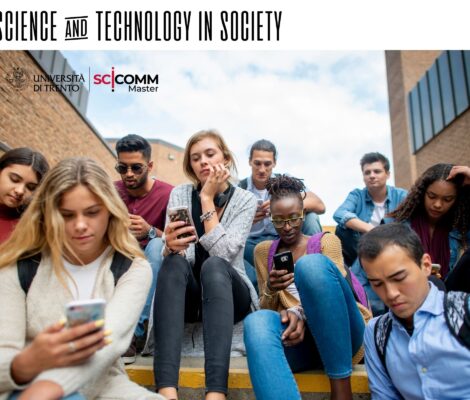
Science in Society: Key concepts
Module 1 – Science in Society
This course examines the essential concepts and findings from Science, Technology, and Society (STS) research that form the foundation for understanding science communication processes and developing effective communication strategies. The curriculum centers on ten key terms that have shaped the field’s evolution, providing participants with the theoretical framework necessary for contemporary science communication practice. Through analysis of recent trends and developments, the course explores how these foundational concepts apply to current contexts where scientific experts interact with diverse public audiences. Participants will gain insights into the changing dynamics of expert-public engagement and learn to apply STS research findings to real-world communication challenges.
Prof. Massimiano Bucchi | Wikipedia
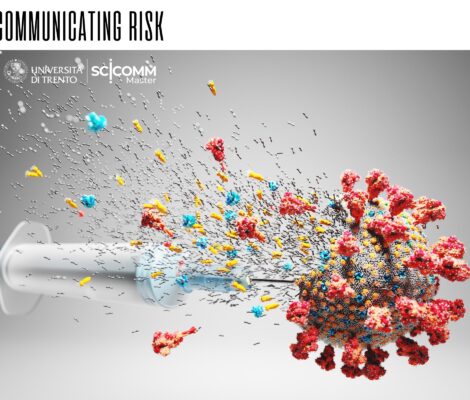
Module 2 – Communicating risk
This course equips participants with essential skills for communicating scientific risk information across diverse audiences and contexts. Students explore probabilistic information related to medical, technological, environmental, and social risk scenarios, learning evidence-based strategies to make complex data understandable and accessible to patients, users, and citizens. The curriculum covers risk perception psychology, effective communication strategies, and approaches for conveying uncertainty without compromising scientific accuracy. Through practical application of these techniques, participants develop the expertise to translate complex scientific risk information into clear, actionable communication that serves both professional and public audiences.
Science in the media: Branding strategies
This specialized workshop addresses the growing market demand for brand identity skills in EU-funded projects, research labs, university spin-offs, and startups. The program begins with developing participants’ personal branding as science communicators, then applies these foundational concepts to creating brand identities for research ventures and academic projects. Through this progressive approach, students master the techniques for crafting compelling visual identities that effectively communicate mission and values while resonating with target audiences in academic and research contexts.
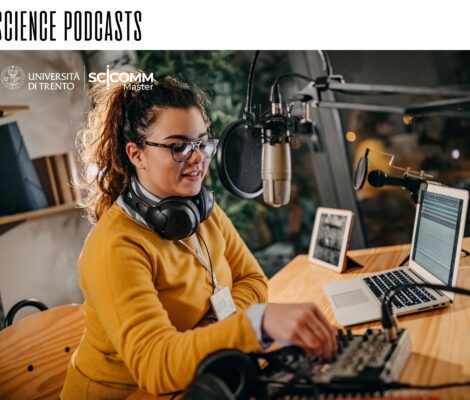
Science Storytelling & Podcasting
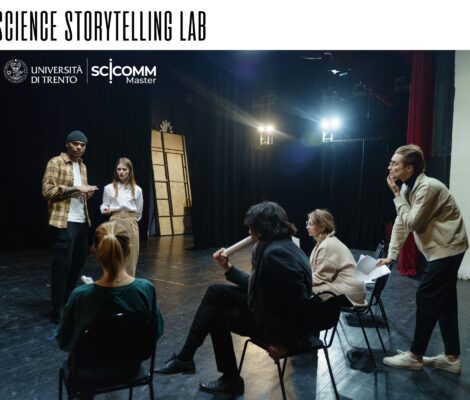
This course explores storytelling theory and practice with special focus on spoken narratives for live audiences and science podcasts. Students will learn to construct engaging stories, adapt content for different audiences, and apply storytelling techniques in educational settings while maintaining scientific accuracy. The curriculum covers story structure, audience engagement strategies, classroom applications, and practical tools for avoiding pseudoscientific content. Additionally, participants will examine successful science podcasts and explore the technical aspects of podcast creation, including software, hosting, distribution, and copyright considerations.
Studying social conversations about science in the digital age
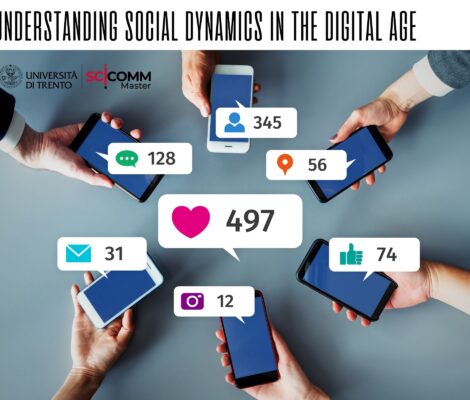
This class provides an overview of online social dynamics and information consumption patterns. Concepts such as echo chambers, (group) polarisation, selective exposure, and hate speech will be explored and discussed. Moreover, the class investigates how data-driven insights can be used to design effective strategies to promote quality and effective science communication and counter misinformation.
Visual Communication of Science
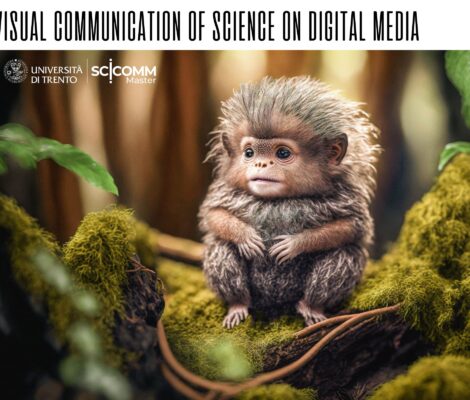
Science today is communicated as much through visuals as through words, yet the images, charts and graphics we encounter are rarely neutral. They can mislead, oversimplify or reinforce stereotypes if chosen carelessly. This course trains students to think critically about visual communication of science — not only how to question the visuals they see, but also how to make deliberate, responsible choices when creating their own. We will explore how context shapes interpretation, and examine both the opportunities and risks of AI-generated visuals. Through case studies and practical exercises, the course provides tools to move beyond intuition and approach visual science communication with greater clarity and responsibility.