
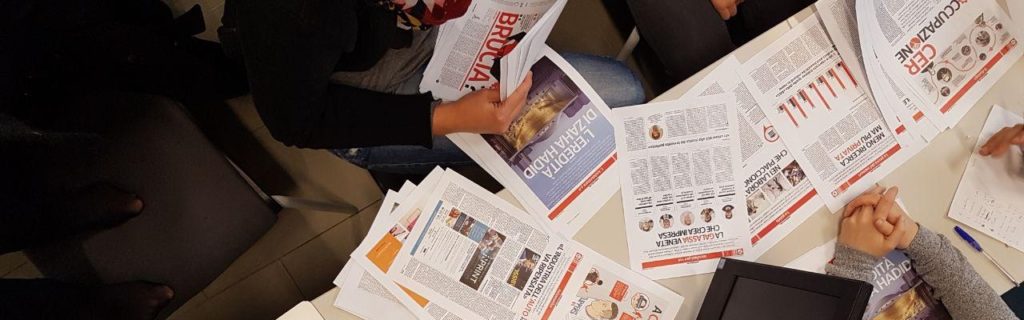
MEET THE SCICOMM PROS
As part of our Master’s program, we offer a dynamic “Meet the Scicomm Pros” series that is refreshed every year to reflect the latest advancements in communication and the evolving job market. We bring in professionals from a variety of communication fields (science, medicine, innovation) to share their insights.
In previous years, our students have had the opportunity to meet:
Martin W. Angler, Attila Bruni, Gabriele Beccaria, Lucia Busatta, Elena Canadelli, Giovanni Carrada, Marco Castellazzi, Trevor Cox, Francesca Fiore, Luciano Floridi, Felice Frankel, Stefano Gattei, Angelo Ghidotti, Claudio Giunta, Federico Guerrini, Tia Kansara, Marina Lalovic, Michele Lanzinger, Silvia Lazzaris, Annika Moberg, Fredrick Moberg, Monica Murano, Giuseppe Pellegrini, Lorenzo Pinna, Annalisa Porrelli, Antonio Pratesi, Jacopo Sacquegno, Massimiliano Saltori, Patrizia Soffiati, Elisabetta Tola, Marta Tomasi, Brian Trench, Ilaria Vacca, Roberta Villa.
Seminar and workshop listings for the 2025/26 academic year are currently being defined.
2025-2026
Using Gen-AI to Communicate Science Responsibly and
Effectively
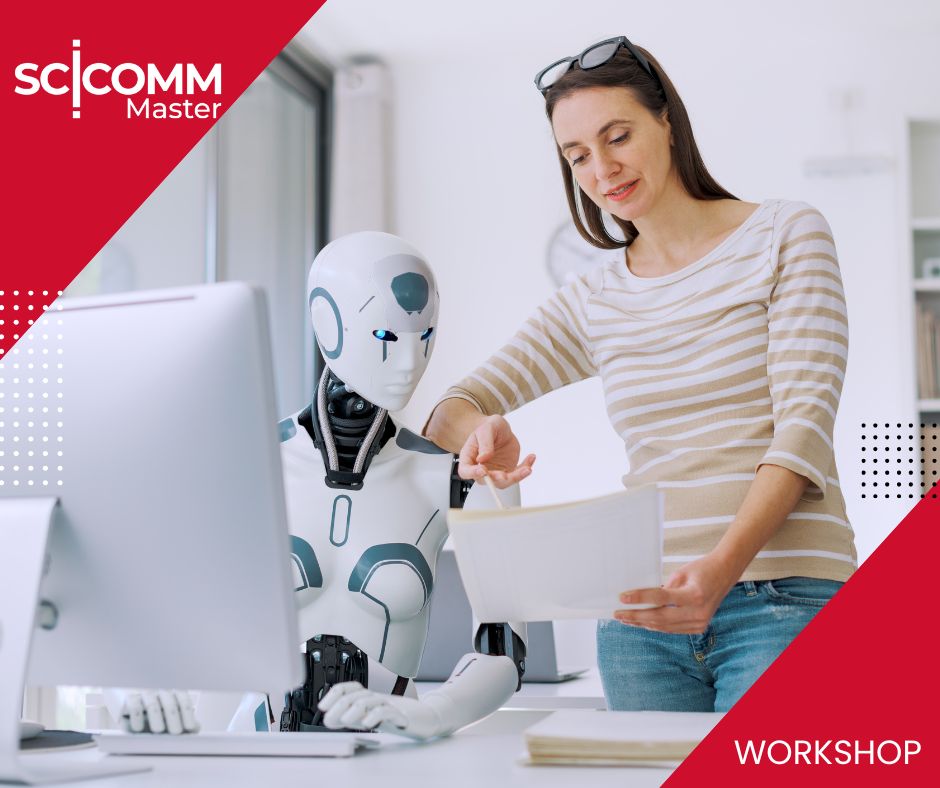
In today’s world, using AI is no longer optional. The Using GenAI to Communicate Science workshop offers science communicators and researchers a deep dive into Generative AI tools like ChatGPT, Gemini, and Co-Pilot, unlocking their potential for science communication.
Beyond a basic introduction, this workshop ensures participants master ChatGPT, guiding it to produce precise, accurate, and engaging scientific content. It covers prompt engineering, content validation, AI biases, and ethical considerations.
Designed for science communicators and researchers, the workshop balances theory with hands-on exercises, equipping participants with practical skills to enhance their science communication through GenAI immediately.
Mohamed Elsonbaty is the founder of SciComm-AI, an initiative helping science communication and journalism integrate AI responsibly through training and consulting. With 15 years of experience, he has trained hundreds of science communicators, journalists, and researchers in effective science communication. He has worked with international organizations to develop and deliver global science engagement projects.
As a science journalist, he has published over 700 articles in outlets like Scientific American, SciDev.Net, Nature, and Popular Science.
He holds a Master’s in Science Communication from the University of Edinburgh (Chevening Scholar) and a Bachelor’s in Pharmacy from Alexandria University.
He is the former Vice-President of the PCST network, co-founder of the Arab Forum of Science Media and Communication, and former Interim President of the Arab Science Journalists Association.